
What types of steel beams and sections are there?
- 30 August 2023
- Published by: Andreas Janisch
- Category: Technology
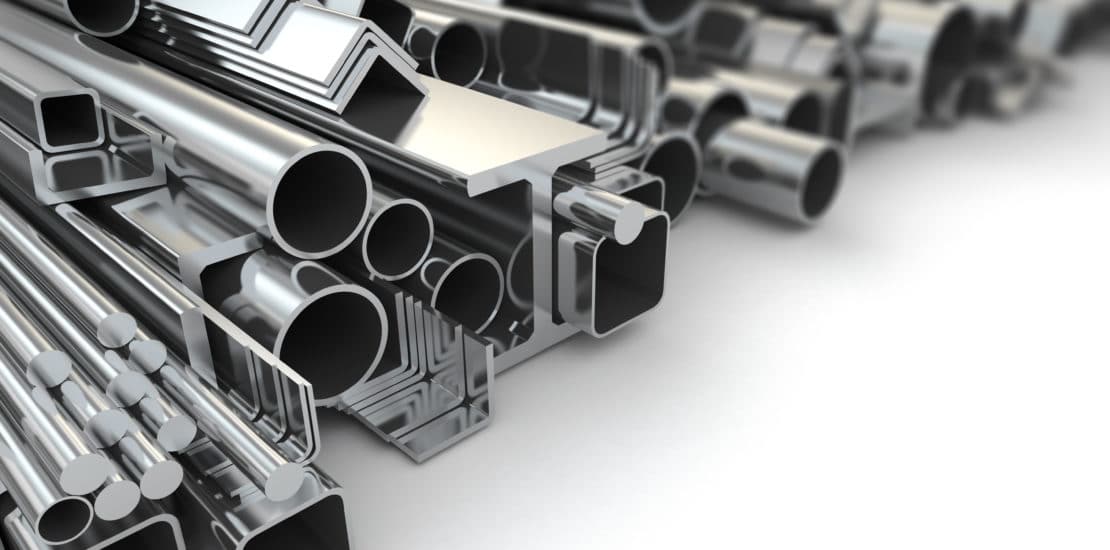
There is a wide range of steel sections that steel construction companies use for different applications. These sections differ in their shape, dimensions and use. Here are some common types of steel sections:
I-beams (IPN, IPE, HEA, HEB, HEM)
I-beams, also known as double-T beams, are among the most frequently used steel sections in construction. They have an I-shaped cross-section and are particularly efficient at carrying vertical loads. Various sub-types such as IPN, IPE, HEA, HEB and HEM offer variations in flange width, flange thickness and web thickness. I-beams are often used as main beams in building structures, bridges and other constructions.
U-channels (UNP, UPE)
U-channels have a U-shaped cross-section, similar to an inverted “U”. These sections are well suited as horizontal or diagonal struts in load-bearing structures. They are also used for purlins, columns and frame structures. U-channels offer stability and rigidity and are highly versatile.
UPE channels have parallel flanges of constant thickness. UNP sections, on the other hand, have flanges that taper slightly towards the outside. UPE sections can therefore withstand higher bending loads, which allows some weight to be saved. However, UPE channels are not available everywhere and are usually more expensive.
L-sections (angles)
L-sections have an L-shaped cross-section and are often used for corner joints, reinforcements and frames. They offer an efficient way of creating corner joints and are also suitable as corner angles for shelving, railings and platforms.
T-beams (T-sections)
T-beams have a T-shaped cross-section in which the stem is vertical and the flange is horizontal. These sections are often used as connecting elements in structures. They can serve for suspensions, anchorages and frame structures.
Hollow steel sections (round tubes, rectangular tubes, square tubes)
Hollow steel sections such as round tubes, rectangular tubes and square tubes have a hollow interior and offer high rigidity at a comparatively low weight. These sections are frequently used in load-bearing structures, railings, canopies and piping systems.
C-profiles and Z-profiles
C-profiles have a C-shaped cross-section, while Z-profiles have a Z shape. These profiles are often used as purlins and columns to transfer horizontal and vertical loads. They are also used in frame structures, roof systems and façades.
Round tubes
Round steel tubes are used in a variety of applications, including railings, load-bearing structures, pipelines and columns. They offer a robust solution for transporting liquids and gases as well as for structural components.
Other sections
In addition to the sections mentioned above, there are many other specialised steel sections, depending on the requirements of the respective project. These include IPE tubes, box sections, angle stud sections and more.
Choosing the right steel section depends on factors such as load requirements, span, design preferences and aesthetic aspects. By selecting the right sections, engineers and architects can ensure that the structure meets the requirements both functionally and aesthetically.
Last revised on 6 September 2023 by Andreas Janisch